Mechanisation of baggage handling at Amsterdam Airport Schiphol
Project facts
- Client
- Royal Schiphol Group
- Location
- Schiphol, The Netherlands
- Date
- 2024
- Challenge
- Integration of solutions to maintain operations whilst transforming baggage handling.
- Solution
- A menu card of design options, process impacts and benefits to aid strategic decision making.
No hands on bags
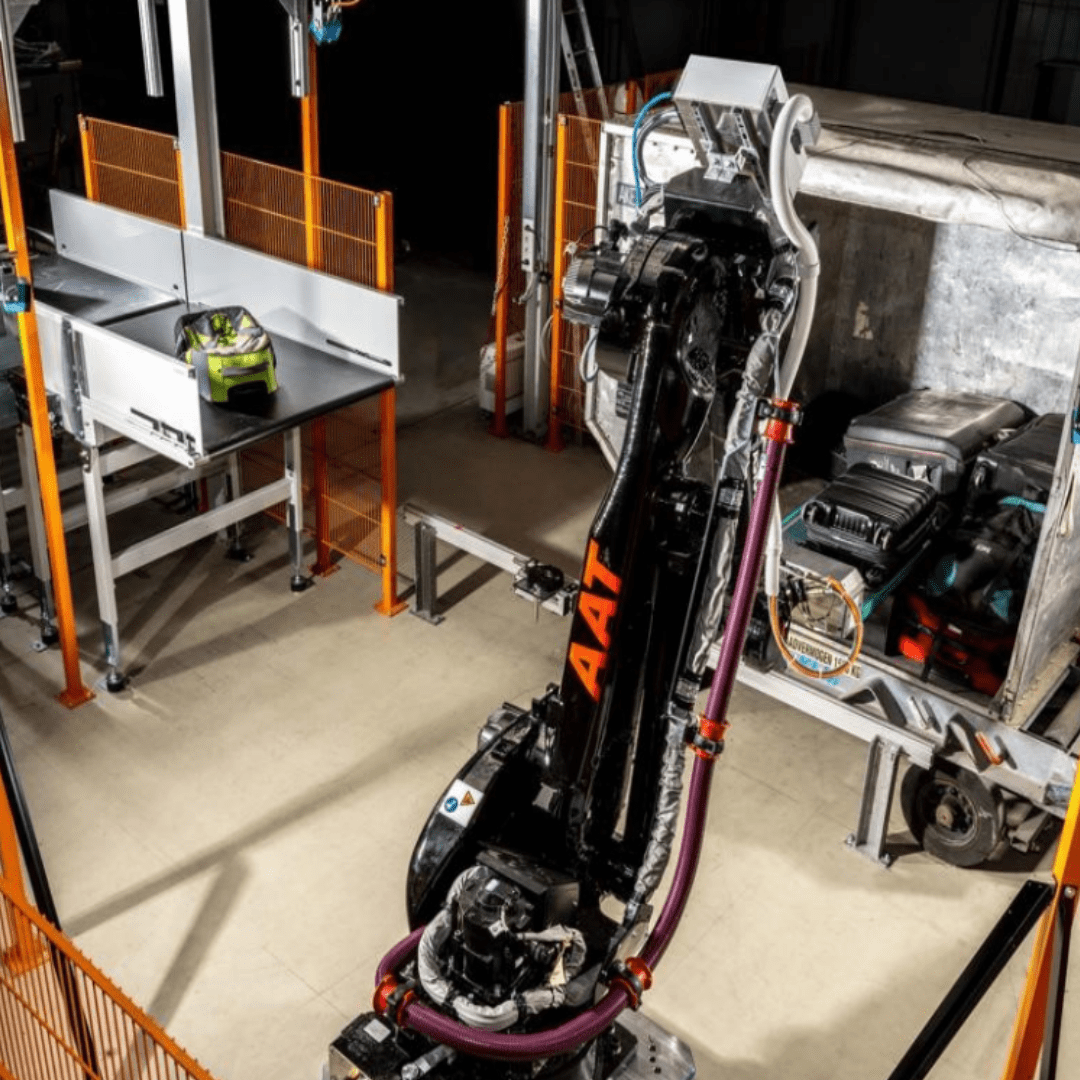
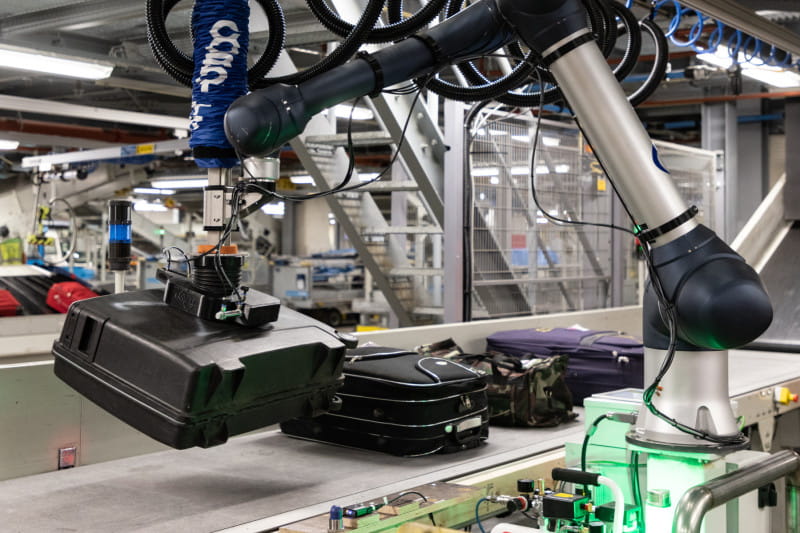
Horizon 2 is a major project which saw Amsterdam Airport Schiphol advance its vision of a "no hands on bags" future. Building on the implementation of Lifting Aids at all operator stations during Horizon 1, Horizon 2 focused on the structural mechanisation of key baggage handling touchpoints, particularly loading and unloading. The objective was to transition from labour-intensive processes to more mechanised or fully automated solutions.
The enhancement of working conditions has long been a key target for Amsterdam Airport Schiphol. It also aligns with the recommendations of the Dutch Labour Inspectorate which in recent years has taken a keen interest in baggage handling. Improved health, safety and environmental (HSE) working conditions was the primary goal of Horizon 2, but additional anticipated benefits included a reduction in human error, improved operational efficiency, and increased overall system reliability.
NACO was engaged to undertake an optioneering, analysis, and integration study. This study examined how innovative automation solutions could increase baggage processing capacity at make-up and offload points, while ensuring seamless integration with the existing baggage handling system and minimising disruption to ongoing operations.
Spatial assessment, process impacts, and feasibility
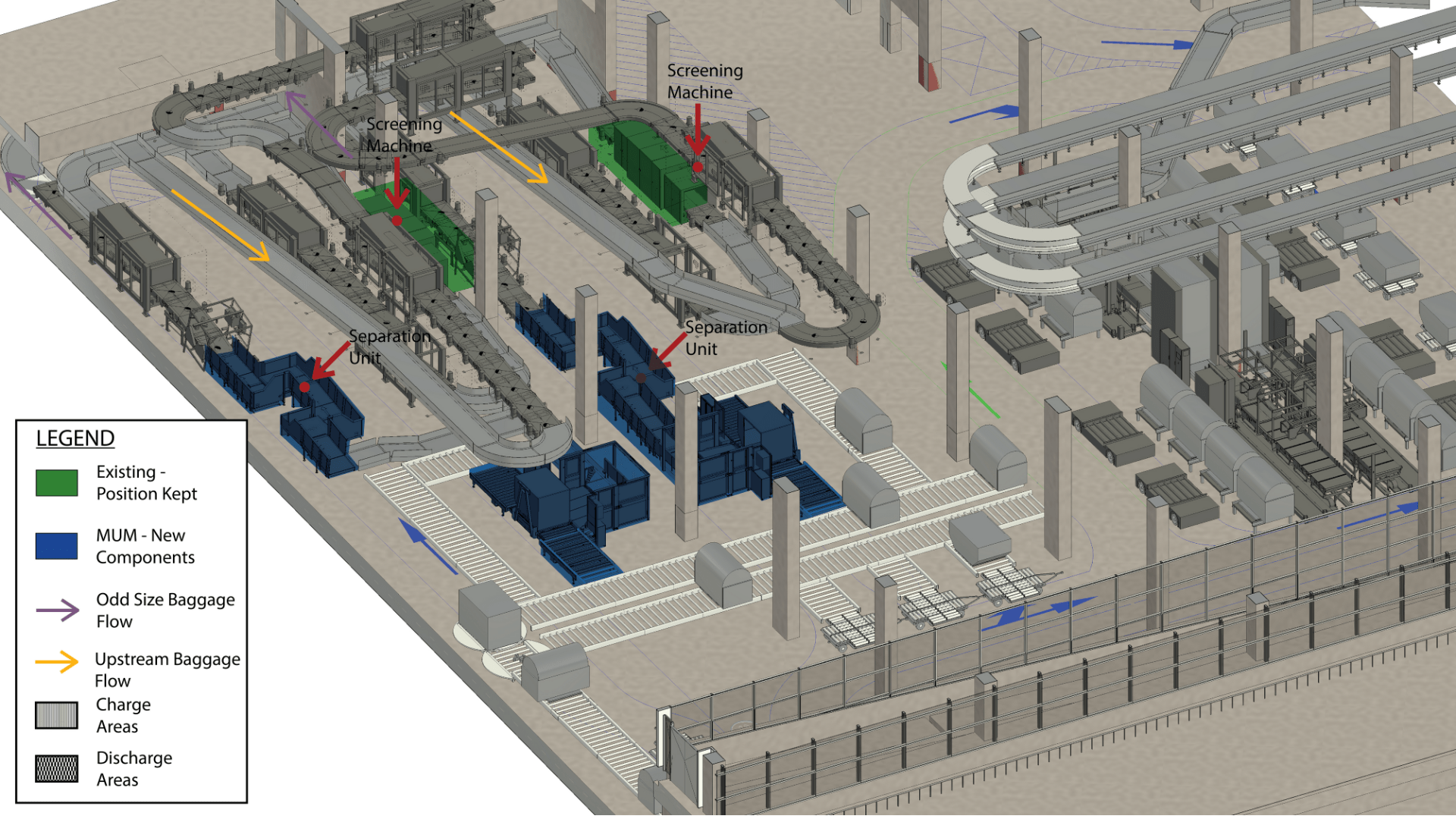
A comprehensive analysis of the existing baggage handling system (BHS) and operational areas was undertaken to evaluate the spatial feasibility of the proposed solutions. In collaboration with Amsterdam Airport Schiphol, innovative solutions - both those already available and those under development within the market - were identified.
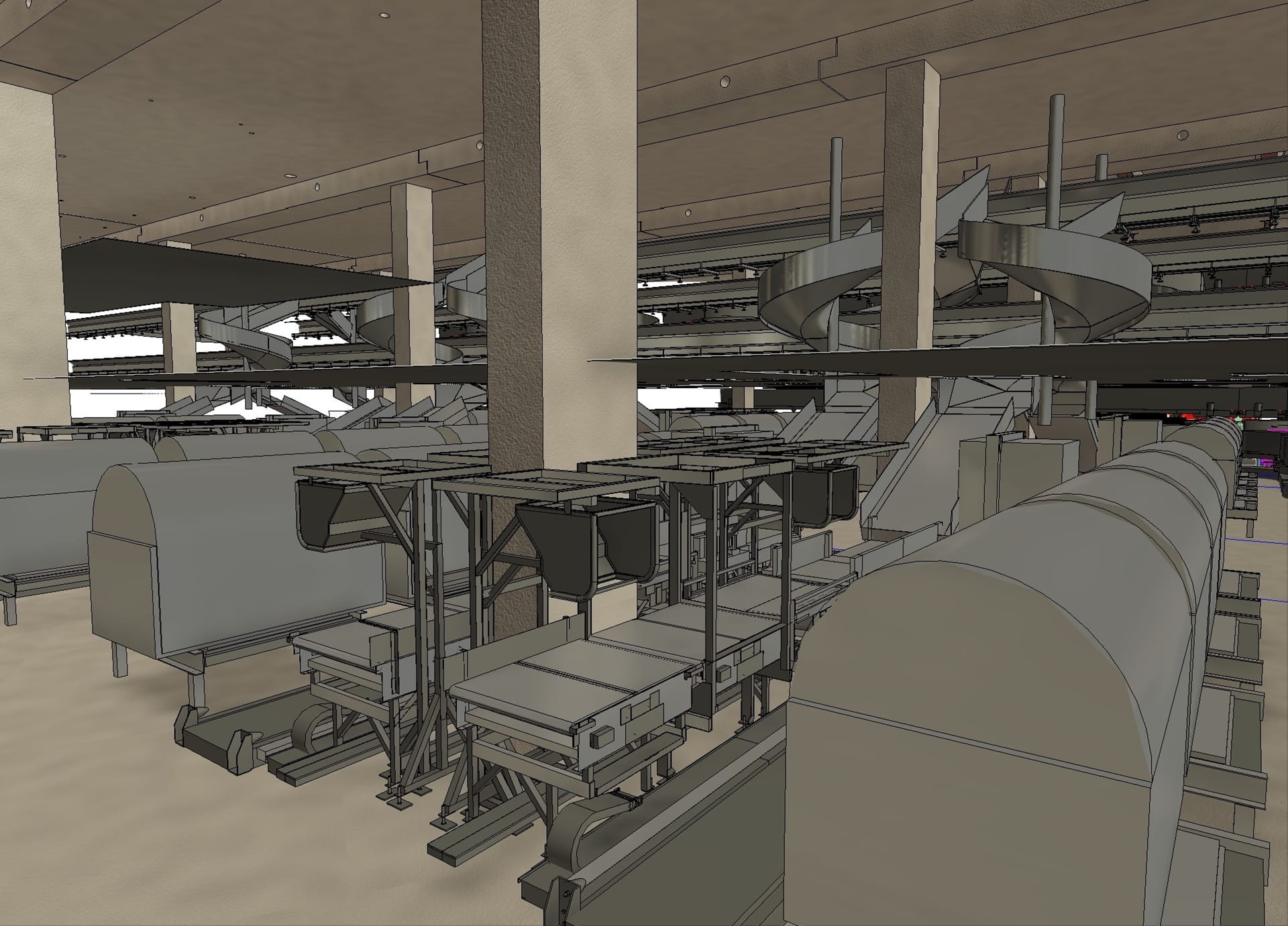
NACO conducted a spatial assessment by developing high-level functional layouts for eight locations across the airport campus. Using modelling software (Revit) and cloud collaboration tools (ACC), the team evaluated spatial feasibility and process impacts, including required supporting functionalities and effects on operational capacity. This integrated spatial and process analysis enabled a comprehensive feasibility assessment of each proposed solution within the baggage handling areas.
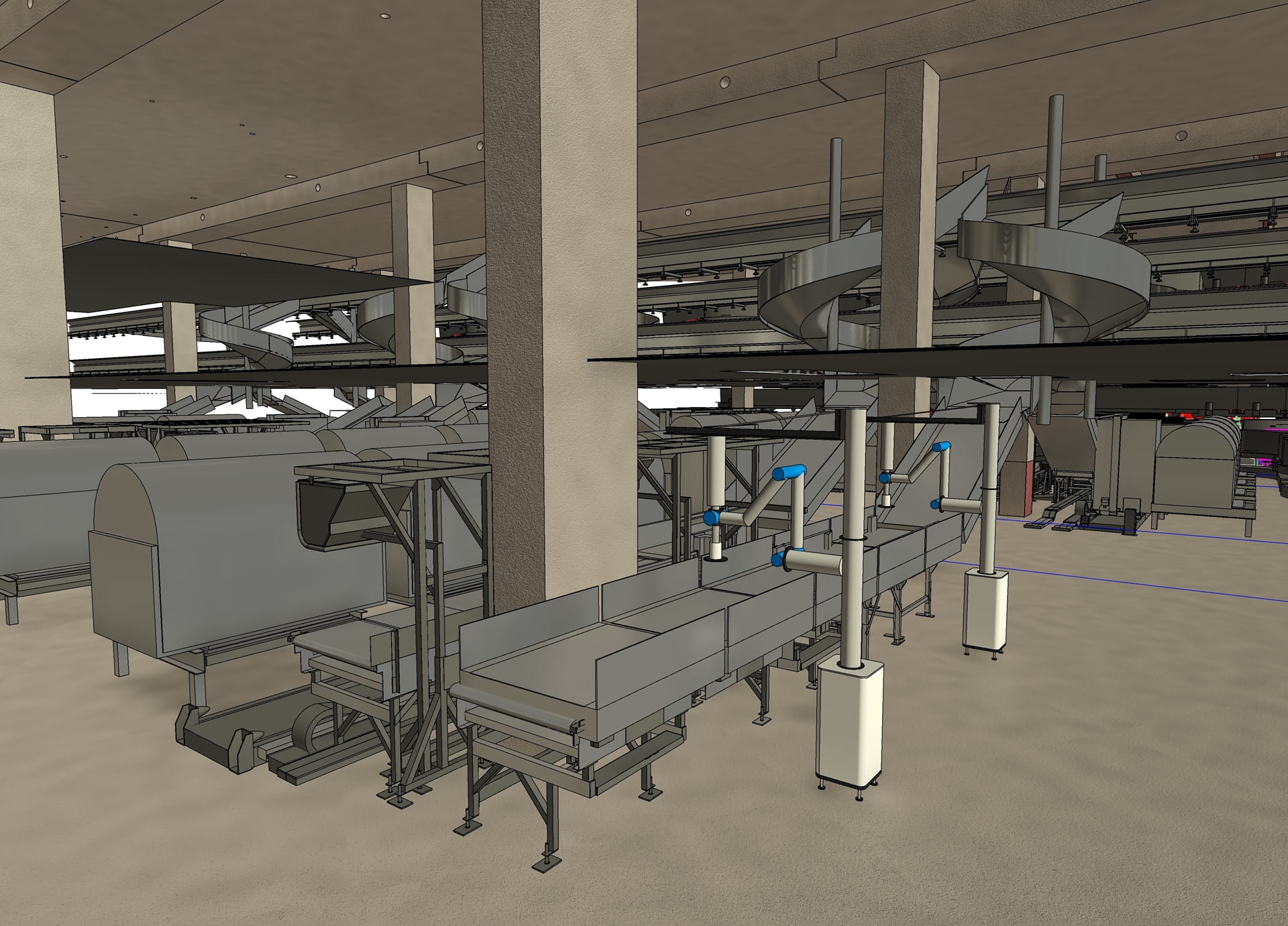
It was a unique and rewarding experience to support Schiphol in shaping the next steps for baggage handling, using a holistic approach and clear visualisation for stakeholder engagement.
A menu of design options, process impacts and benefits to aid strategic decision making
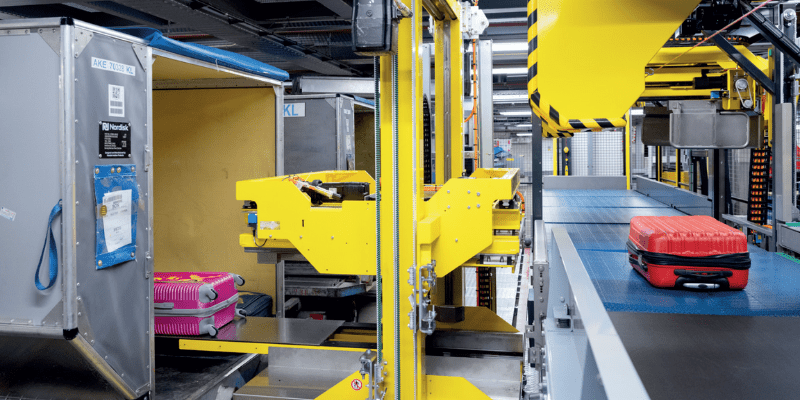
NACO provided a comprehensive menu of customised solutions for all baggage handling areas at Amsterdam Airport Schiphol. The integrated designs featured both mechanised and fully automated make-up and offload solutions. These were specifically tailored to address the diverse challenges across the baggage halls, such as limited ceiling heights that constrain equipment installation, narrow structural grid spans, and operational zones where loading bags was not feasible due to spatial or access limitations.
These solutions were aligned with the airport’s strategic mid-term roadmap, supporting the overall structural transformation of baggage handling operations. Solution development and on-site testing were carefully considered, ensuring that project timelines coincided with key BHS asset upgrades. This approach facilitated a phased transition to mechanised baggage handling while minimising disruption to ongoing airport operations, which was eventually presented and agreed with the Dutch Labour Inspectorate.
The rollout and transition, in line with the roadmap created, is expected to continue over the coming years.
This project contributed to the following UN Sustainable Development Goals.
Affecting the baggage handling operations across the entire airport