RCR-TOOL©: Get more out of your runway

The challenge: Manual GRF compliance slows operations and increases safety risks
The ICAO Global Reporting Format (GRF) requires airports to continuously monitor runway conditions to report them whenever significant changes occur. Yet, at many airports, this process remains manual—slow, labour-intensive, and challenging to perform accurately. Despite advanced measurement technologies, inspectors still need to spend significant time on the runway to perform physical checks.
The result? Increased operational disruptions and risks—precisely what airports aim to minimise.
ICAO recognises these challenges and notes there may be only one method accurate enough for runway condition reporting:
It seems that water depth modelling is currently the only available method that can be used in a timely manner to inform flight crews of the amount of water present on a runway.
Our solution: Real-time, automated GRF compliance
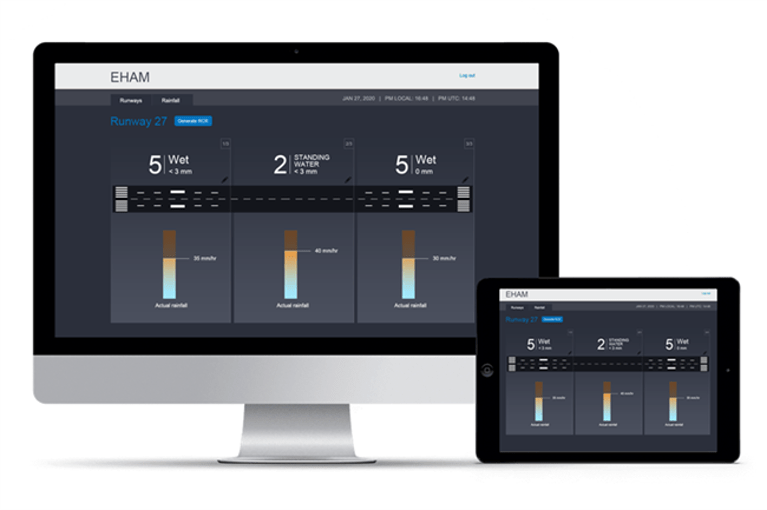
That’s why NACO developed RCR-Tool©; a smart digital solution that uses advanced runway surface condition simulation to assess runway conditions.The system delivers accurate, real-time RCR’s, replacing subjective manual inspections and ensuring full ICAO GRF compliance.
Designed with users in mind, RCR-Tool© is intuitive and practical, empowering operators to reduce runway excursion risks and increase operational efficiency without stepping onto the runway.




Watch the video → NACO’s RCR-Tool© | GRF compliance made easier
Key benefits of NACO'S RCR-TOOL©

Increased safety

Full GRF compliance
Easy to install and maintain

Maximised runway capacity

Lower cost and higher revenues

Reduced carbon emissions
Trusted by airports worldwide
Under difficult circumstances, NACO provided a solution with their RCR-Tool© that sets a benchmark for runway condition reporting under the GRF format. Today, we can act quickly in the face of changeable conditions, and report accurately resulting in increased runway safety for airport personnel, passengers, and aircrews.
RCR-Tool© in action
From Paris to Munich, Istanbul, Bonaire to Barbados, and Rotterdam to Rio de Janeiro, airports worldwide trust RCR-Tool© to automate runway condition reporting, improve reliability, and increase operational efficiency—while ensuring full ICAO GRF compliance.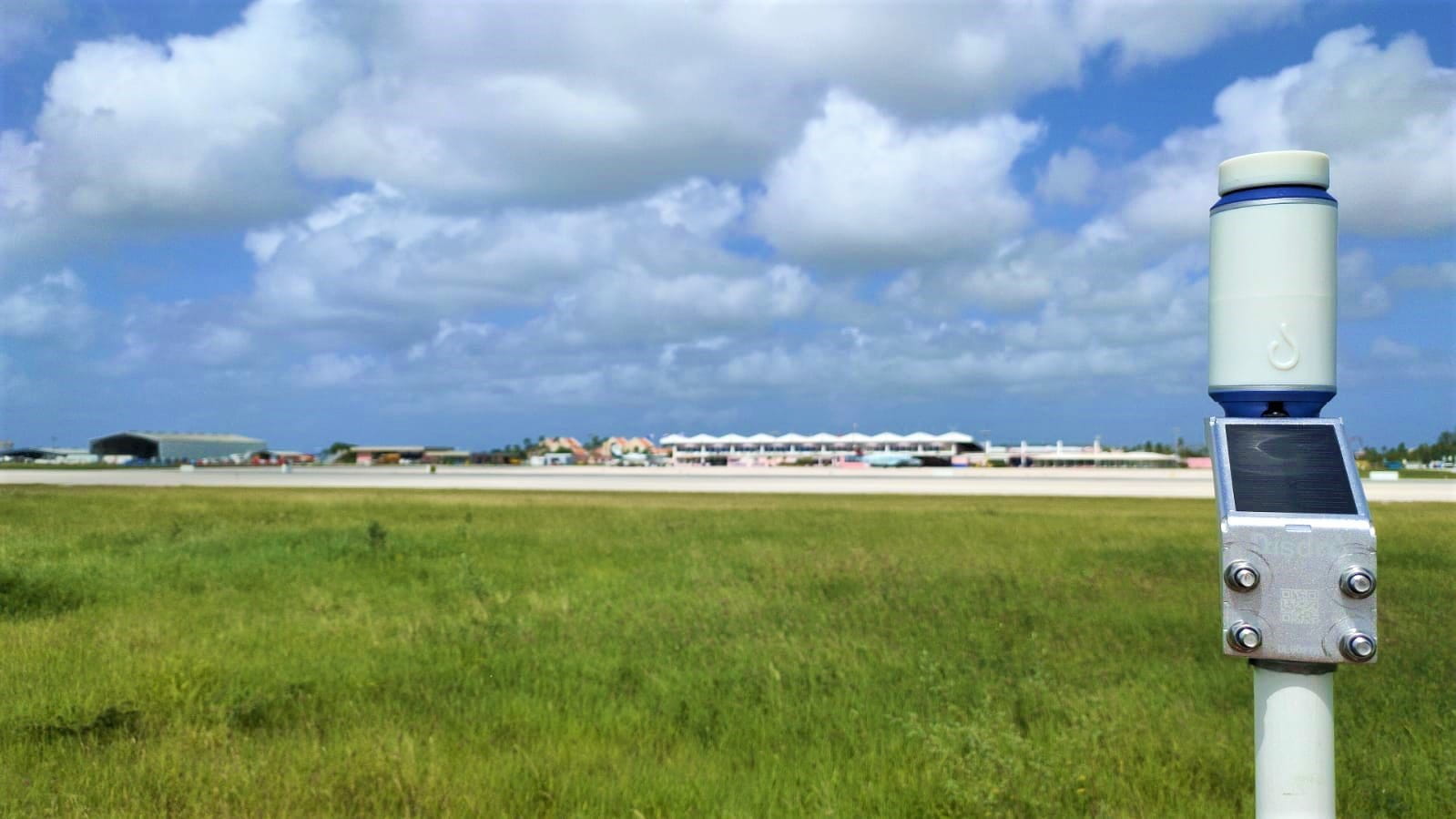
Project reference: RCR-Tool© in the Caribbean
At Bonaire International Airport, RCR-Tool© enables continuous, GRF-compliant reporting without runway closures—improving safety and efficiency in highly dynamic tropical weather conditions.
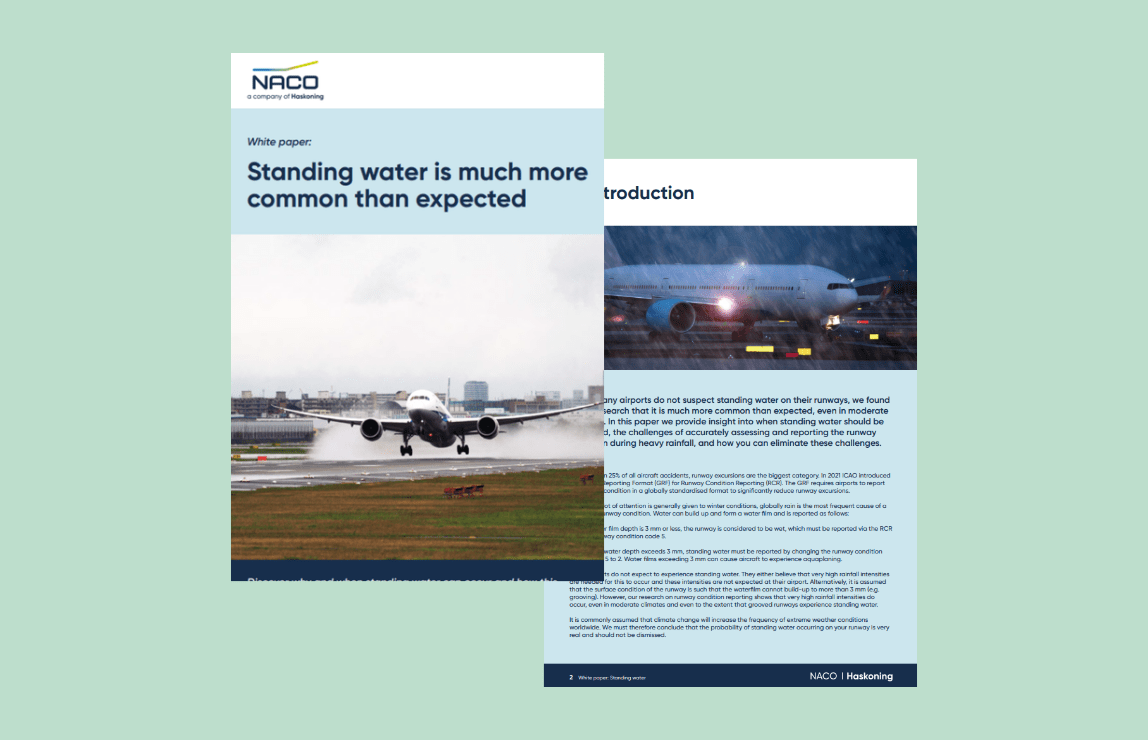
Standing water white paper
Standing water is much more common than you expect! Learn why it occurs and the impacts on runway safety and operational excellence. Get solutions for safer and more efficient airport operations.
Built on 75 years of aviation expertise
At NACO we help airports leverage automation, technology, and data to enhance efficiency and safety. Built on over 75 years of aviation expertise our RCR-Tool©, is a sophisticated runway condition reporting tool, designed to meet new ICAO expectations and regulations.
Developed with extensive knowledge of runway pavements, contaminants, airport operations, and digital transformations it offers valuable insights to improve airport operations.
Ready to see how RCR-Tool© can optimise performance at your airport?
Let’s explore how it can fit into your operations.