Shaping the future of customer experience at Lima airport
Project facts
- Client
- LAP
- Location
- Lima, Peru
- Date
- June-December 2022
- Challenge
- Review the design of the new passenger terminal and deliver prioritised initiatives that elevate sustainability and customer experience (CX) fit for the future.
- Solution
- A comprehensive roadmap to a sustainable terminal that delivers for passengers.
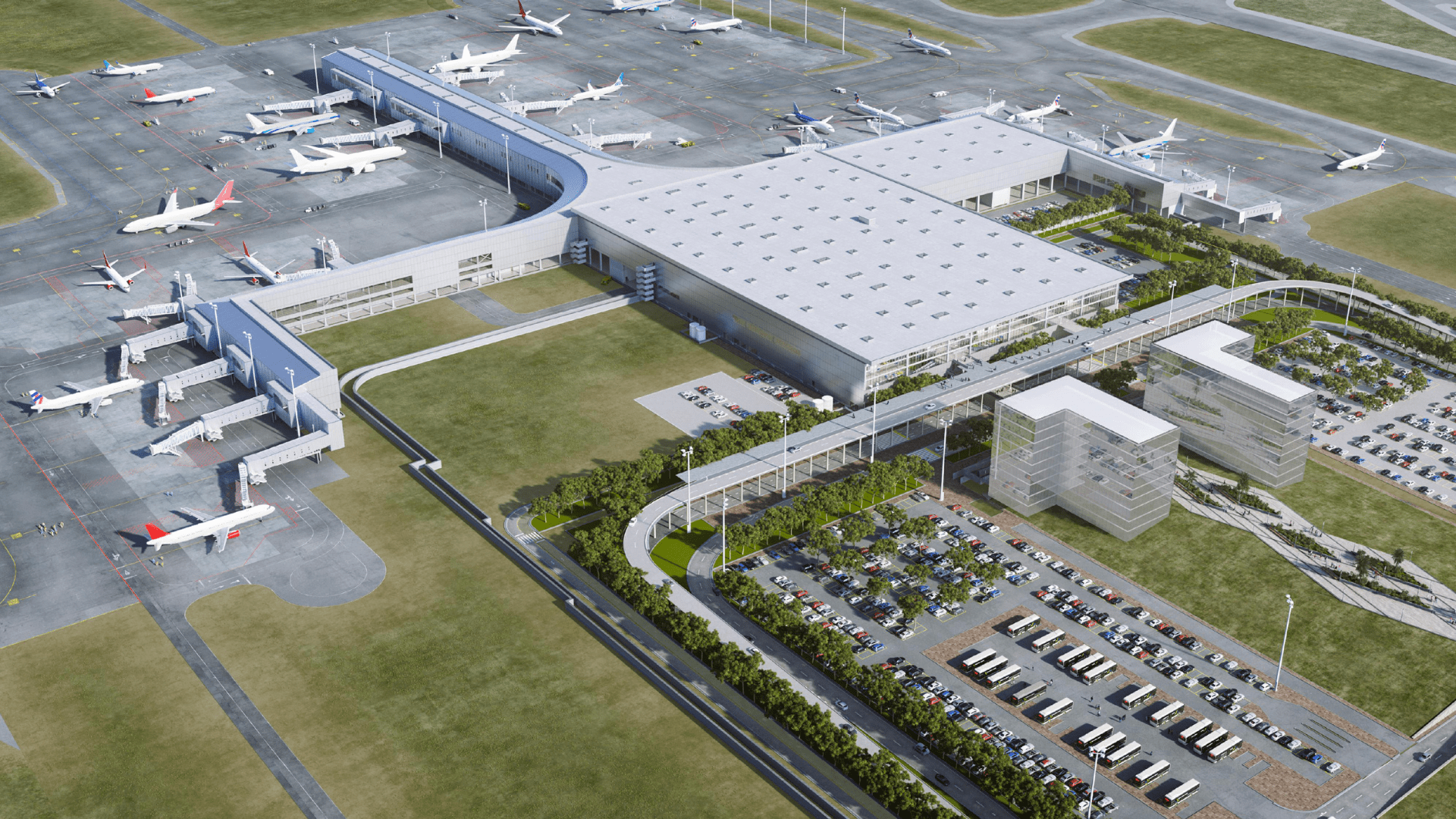
The expansion has already delivered a new airport control tower and a second runway which opened in 2023 and the airport served close to 23 million annual passengers that year.
The last piece of the puzzle is the creation of a new passenger terminal, which will serve 30 million passengers annually when it opens in 2025.
To boost the potential experience of those passengers in the new terminal, NACO was appointed by operators, Lima Airport Partners, to perform a design review of the terminal.
Our work provides them with a high-level passenger experience strategy and a sustainability route, identifying improvements across accessibility, seamless flows & wayfinding, energy efficiency and local environmental challenges.
Defining the passenger experience
Customer experience lies at the heart of any airport. It is the seemingly intangible thread of logistical, design and sustainability decisions that colour our experience – from landside, through bag drops to commercial areas, the concourse and gates.
Done well, it can ease the nerves of those anxious first-time flyers, or ensure experienced travellers keep coming back. However the many complexities and interdependencies make this a daunting endeavour for many airports who are seeking to balance timely investments into processes, technology, services and staff so that they can continue to meet the rapidly evolving needs of the passenger in the 21st century.
An integrated solution to enhance airport CX and support profitable operations
Our customer experience strategy and approach were anchored in the principles of how airport infrastructure can be a force for good in serving the community, turning Lima into an important hub for the region and connecting South America to the world.
We gathered a broad range of documentation from Lima Airport Partners – from floor plans to commercial reports and the outcomes from Sense of Place workshops. From these, we identified risks and opportunities, presented global benchmarking with latest trends and best practices – and produced a navigable matrix of customer experience and sustainability recommendations.
The intent was to put Lima Airport on the front foot in its sustainability journey and future-proof its passenger experience. For example, we suggested an existing fuel farm could be repurposed for Liquid Hydrogen Storage, or unused airport roof space could used for renewable energy generation via solar panels.
Elsewhere, we suggested shortening distances from public kerbs to the new terminal – and rethinking the positions of the bus and metro stops to enable a sustainable hub concept, that makes multi-modal travel more accessible for passengers.
A comprehensive roadmap to a sustainable terminal that delivers for passengers
We took care to present our recommendations in a way that Lima Airport Partners could use to take their next steps strategically and communicate with stakeholder and partners in the process.
To do it, we divided the airport design into ten key areas – from landside to airside. We organised our outputs against nine themes, aligned with both the 17 UN Sustainable Development Goals and three focus areas of LAP’s sustainability framework.
For each recommendation, across each section of the airport, we identified stakeholders who should be involved, the benefits of implementation and the amount of time that should be allowed to implement it.
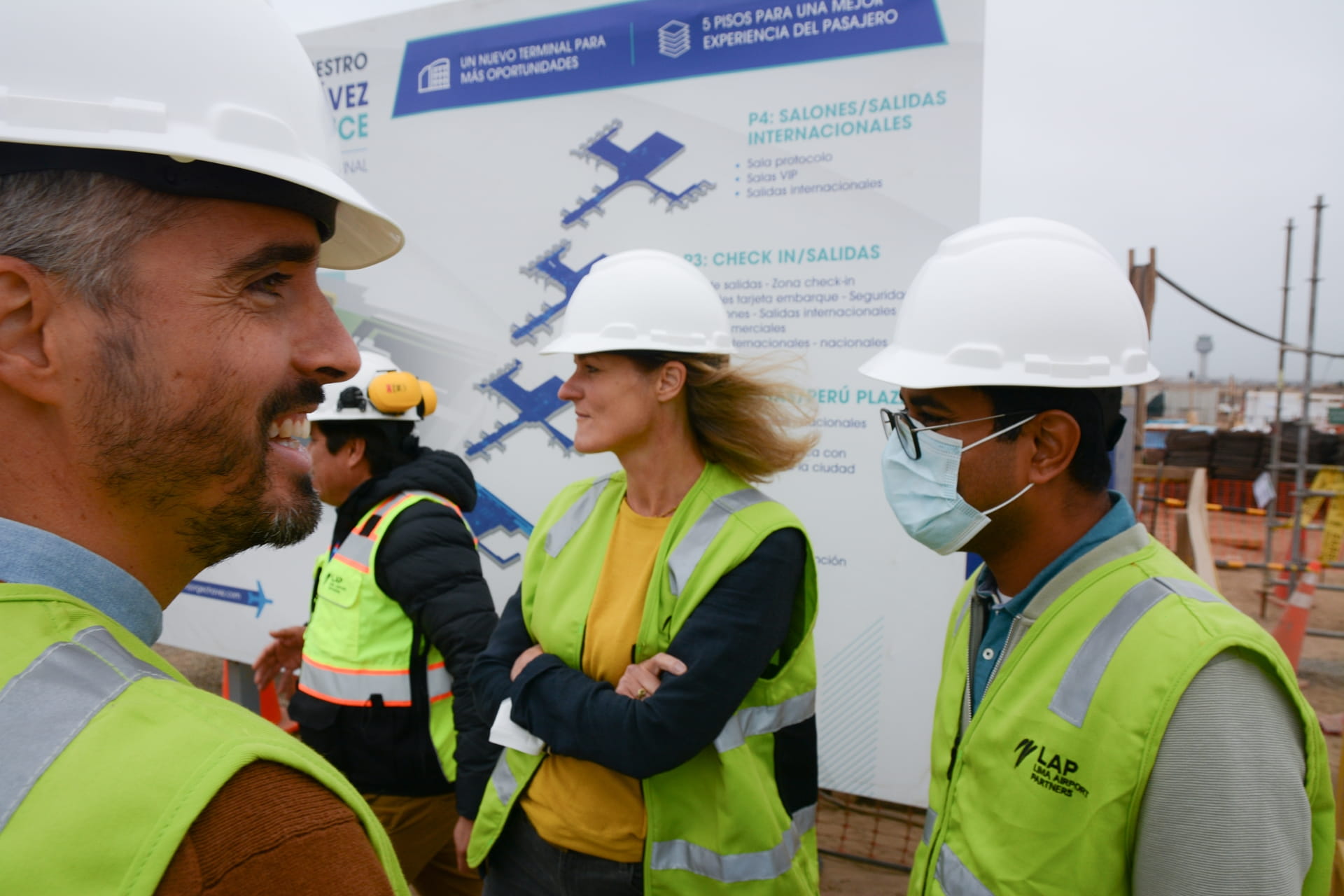
Aligned with UN SDGs, NACO proposed a transformation for LAP’s midfield terminal focusing on optimising customer experience, sustainability, and aesthetics. Their roadmap reflects an excellent understanding of our business.
Guiding Lima Airport into a new era
The breadth of our recommendations ranged from engaging with local artists and entrepreneurs through seasonal events, community displays or pop-up shops that build connections to the community; to identifying access areas, like cafés and the passenger waiting lounge, that could be redesigned to improve acoustics.
The result of the process was a strategy that organised the customer experience and sustainable route for Lima Airport into a comprehensive and cohesive roadmap, that could be used to plan enhancements to the terminal design, or future investments.
Taking an integrated approach to the airport infrastructure system will connect the new Jorge Chávez airport to the the city and lay the foundations for social and economic development of both the city and the country.
The new terminal is expected to be open in 2025.
This project contributed to the following UN Sustainable Development Goals.